
Pinhole Photography
What it is
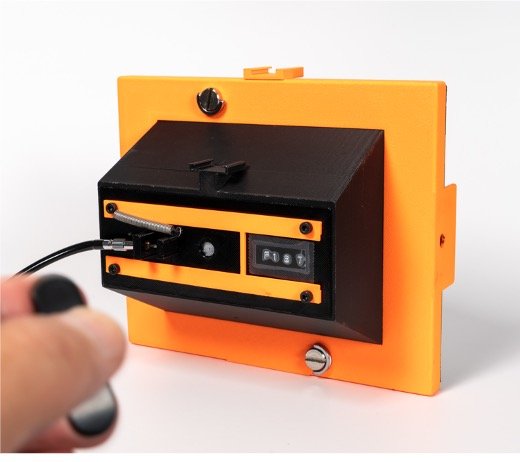
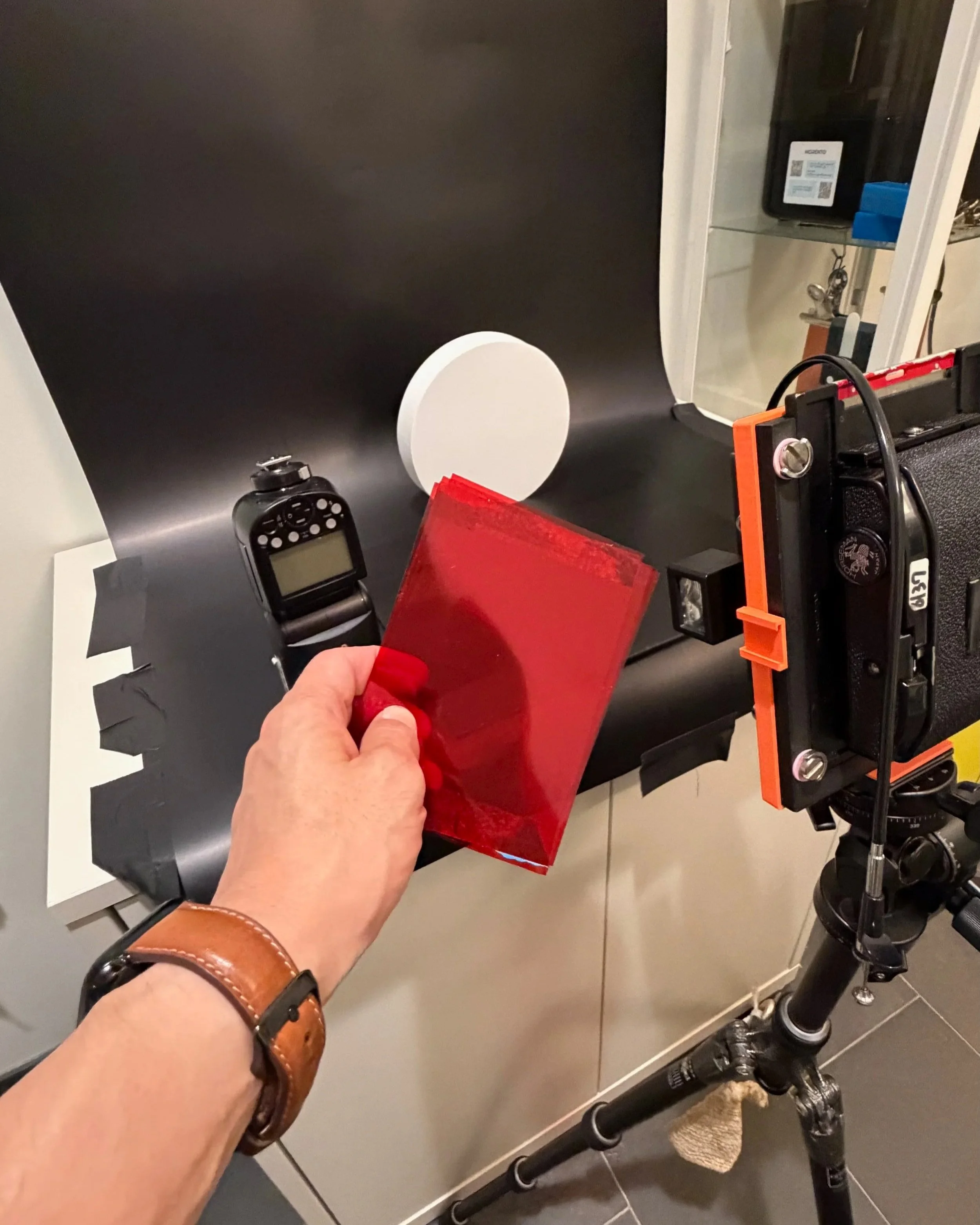
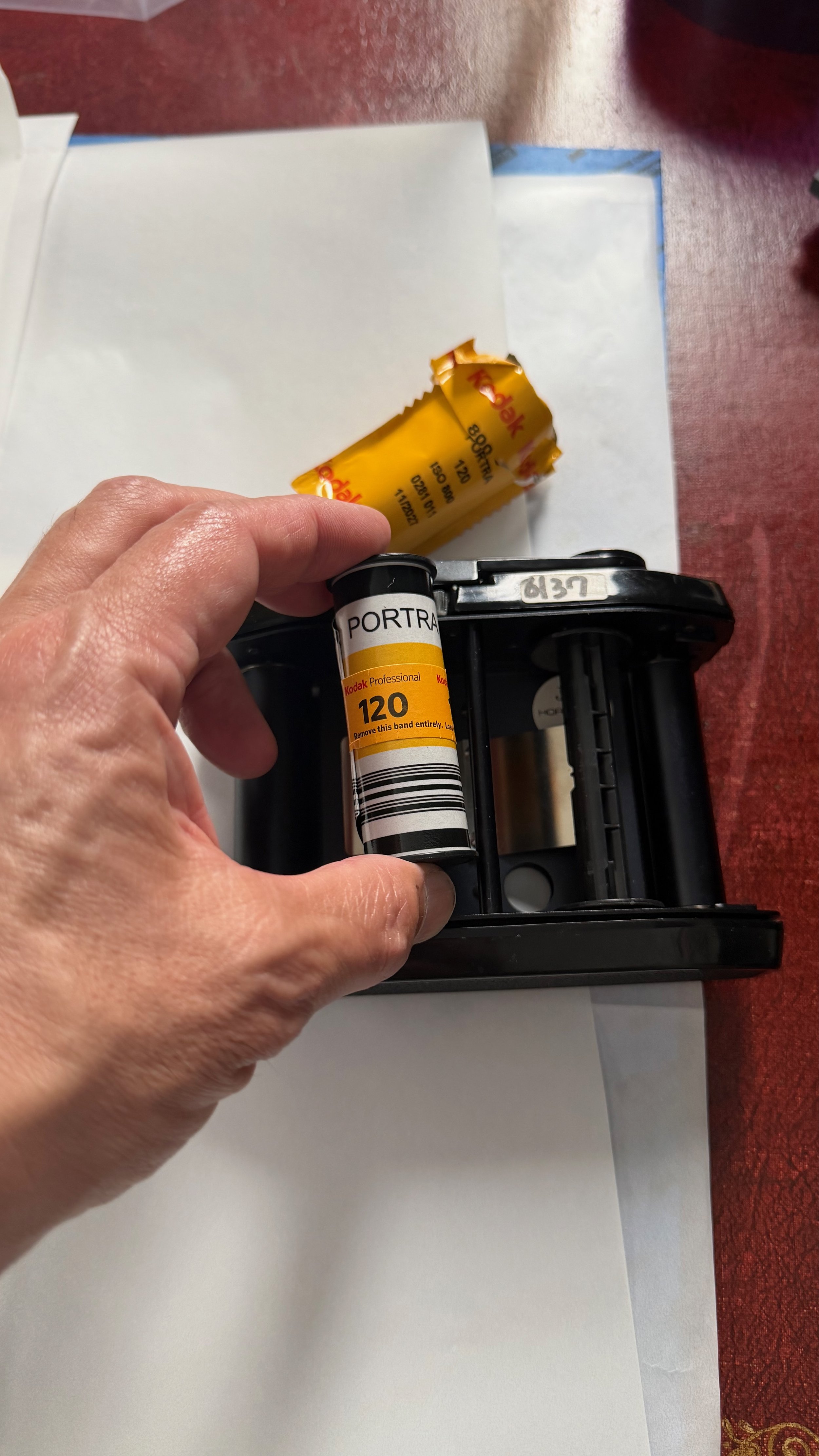
A pinhole camera has no lens. Where an ordinary camera uses glass to focus light, mine uses only a tiny hole. Light passes through that single opening and falls directly onto the film. I design and 3D print the camera body myself, which lets me control the exact dimensions that shape the image: the diameter of the hole, the distance from the hole to the film, the angle of the light's path. The back is fitted with a Horseman roll film holder, an adapter made for large format view cameras of an earlier era, which advances the medium format roll film across the image plane. The long exposures the camera requires give the images their characteristic depth.
What it brings to the work
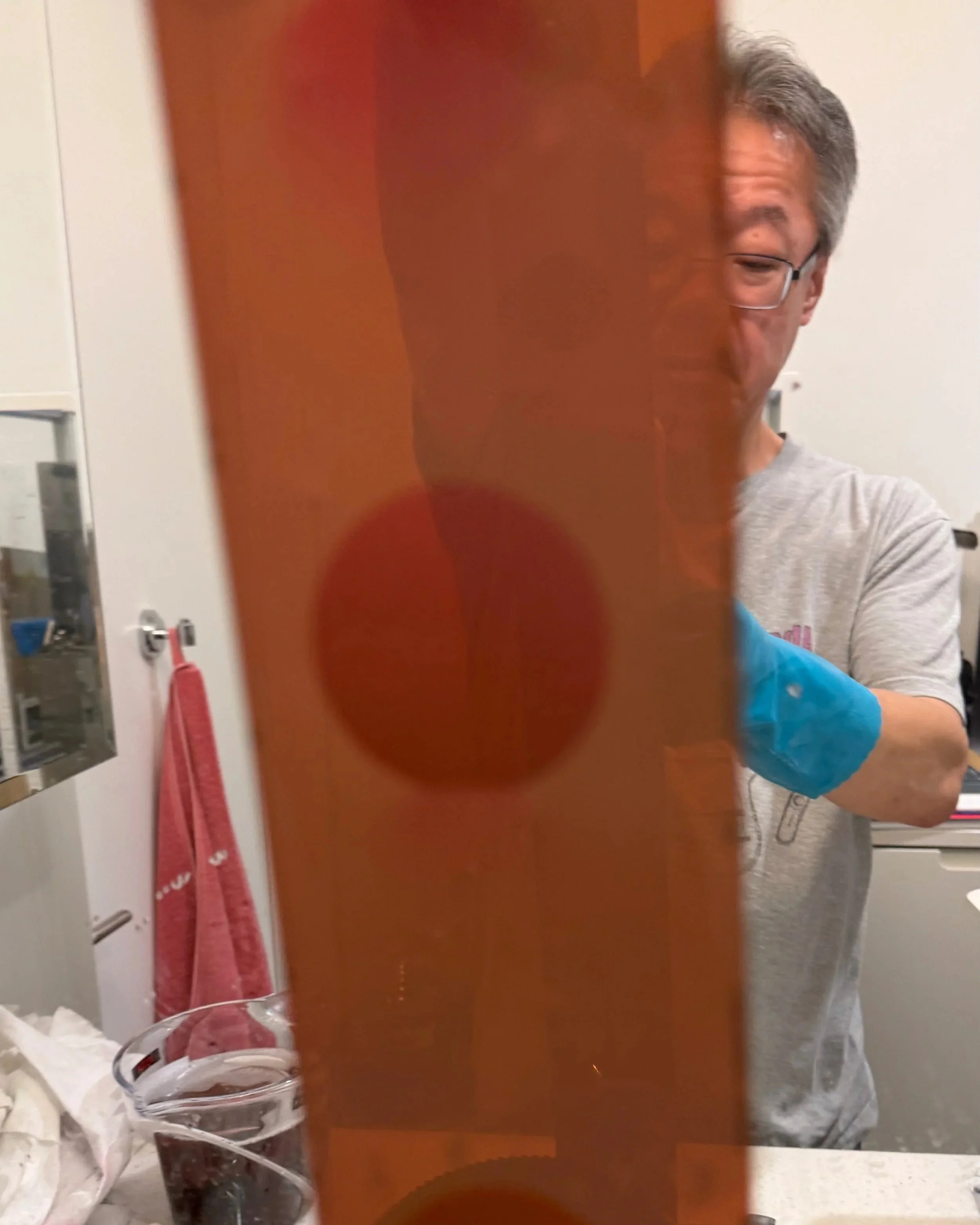
A lens draws a hard, precise edge. A pinhole does not. Because the light is gathered through one small opening rather than focused, every edge softens and forms bleed gently into one another. Surfaces lose their sharp detail and read instead as broad fields of tone, and colors settle and blend rather than staying crisply separated. Nothing in the image snaps to a point of perfect focus. The whole frame holds a uniform, quiet softness. The camera itself joins two eras: a modern body I design and print, mated to a film holder from the older tradition of view camera photography. These qualities are not imperfections to be corrected. They are how the pinhole sees, and they are where most works in Looking Deeper begin.