Image Transfer
What it is
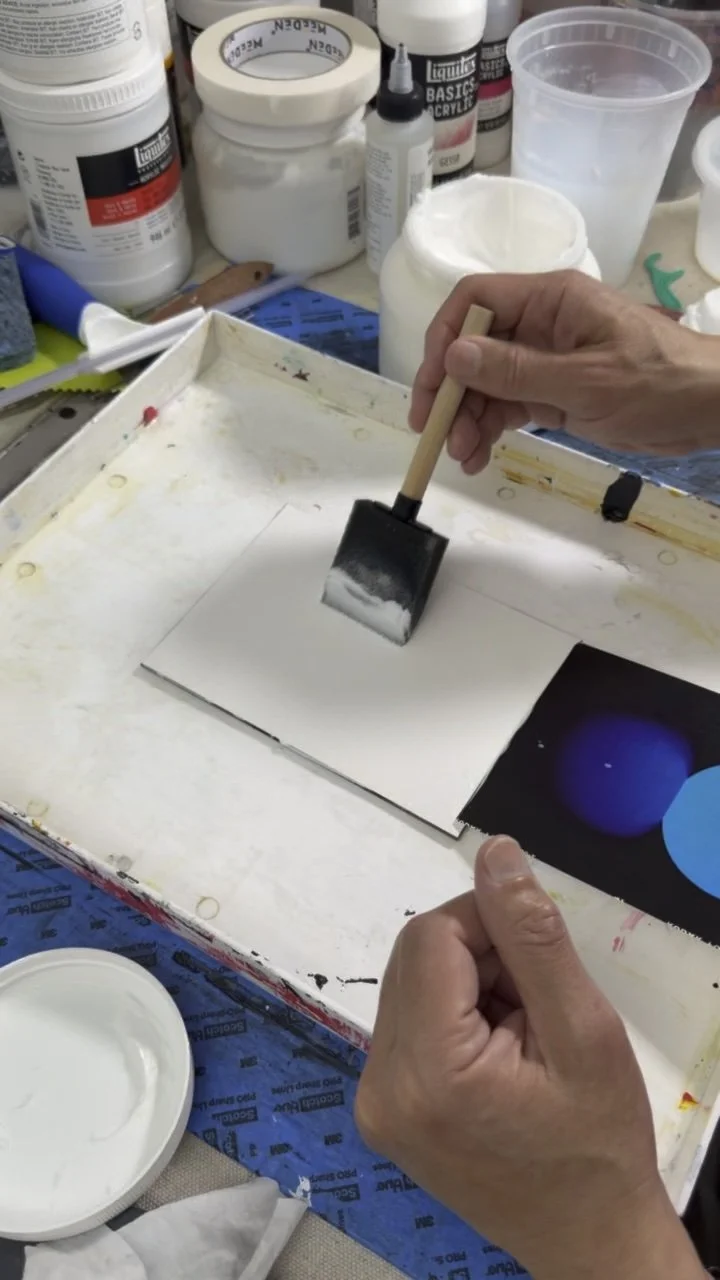
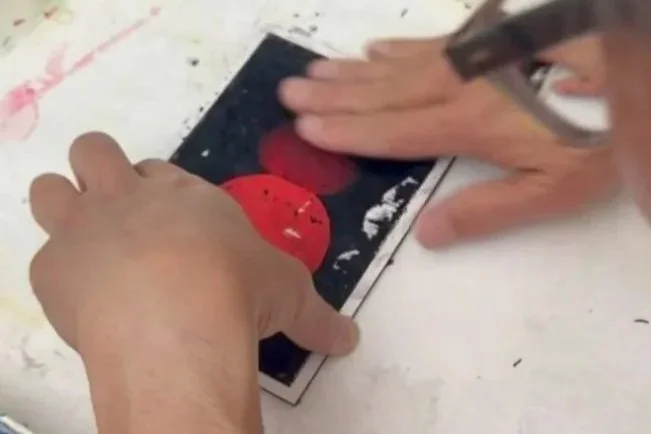
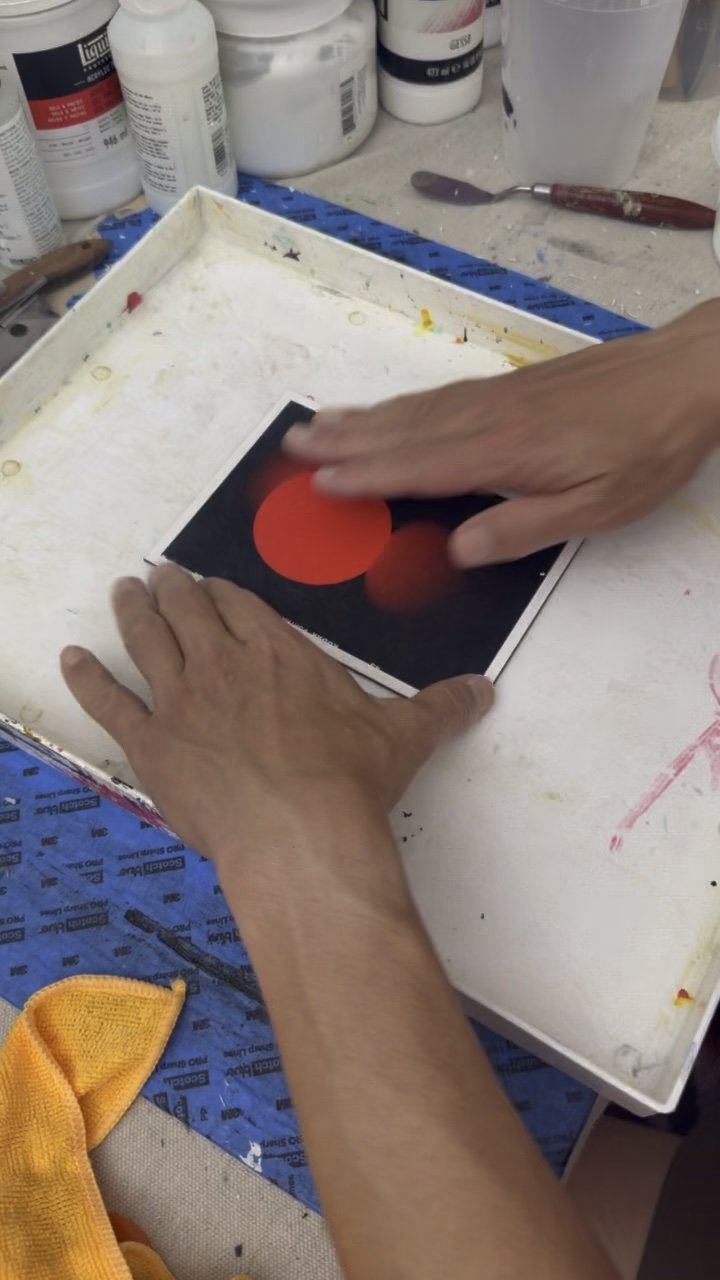
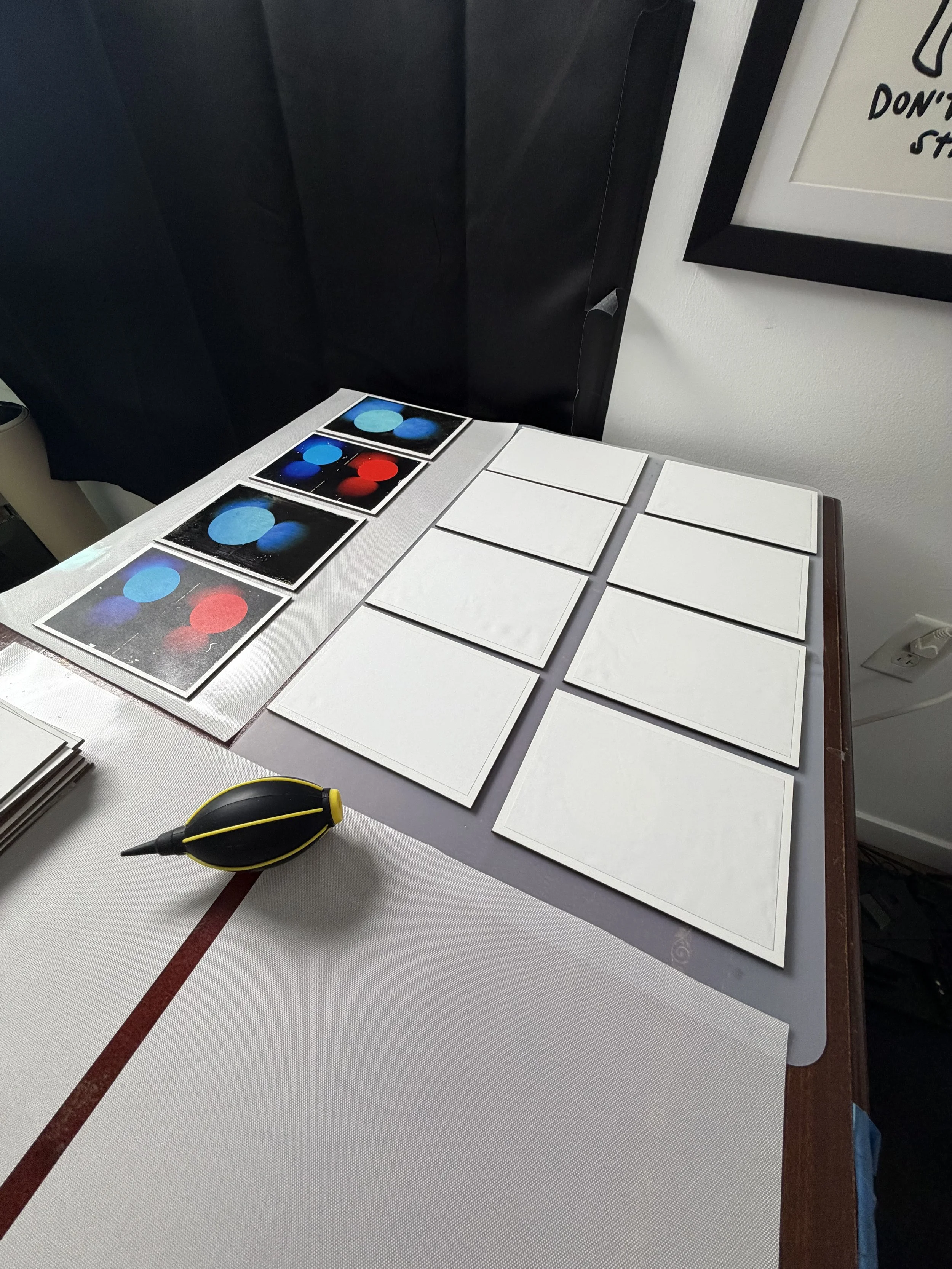
Image transfer moves an image off of paper and re-forms it into a layer of clear acrylic gel on a panel. I begin with a photograph from my pinhole camera, printed either by inkjet or by laser, then lift that printed image from its sheet and embed it into the gel, which becomes the surface that carries it. Rather than printing the photograph onto paper as a final product, I build the transferred surface up by hand, one stage at a time.
What it brings to the work
For me, transfer is not a finishing effect. It is the printing process itself. Every piece pairs the high tech with the handmade: a print pulled from a modern machine, then worked into gel by hand, stage by stage, until the machine's clean sheet becomes a singular object. Each work exists as a single, one of a kind object rather than a copy, and the material chain stays unbroken from the pinhole camera's original light all the way through to the final surface. The process leaves its evidence visible, sometimes as faint irregularities and texture, sometimes as bold breaks and skips across the image, always as the record of the hand carrying the image across. I set the rules of each transfer in advance and accept what the process returns, so these marks are proof of the making rather than accidents cleaned up afterward.
Inkjet and laser
Whether a print is made by inkjet or by laser shapes how it releases into the gel, and the two leave different surfaces behind. With inkjet, the pigment sits in the gel at varying densities depending on how fully each area was encapsulated, so the surface carries a worked, uneven texture where the color reads heavier in some places and thinner in others. A laser print carries its image in a thin layer of plastic toner, and transferring it means peeling that plastic layer away from the gel, which tends to leave a smoother, more even surface. The choice between them is part of how a given piece finds its final form.