
Touch the Light: Mixed Media
by Hayata Takeshita
This body of work explores a central question: Can beauty emerge without micromanaging it? Using custom pinhole optics, geometric assemblages, and multi-stage gel transfers onto physical panels, these works transform light events into singular objects that modulate pigment density, surface reflection, and optical depth.
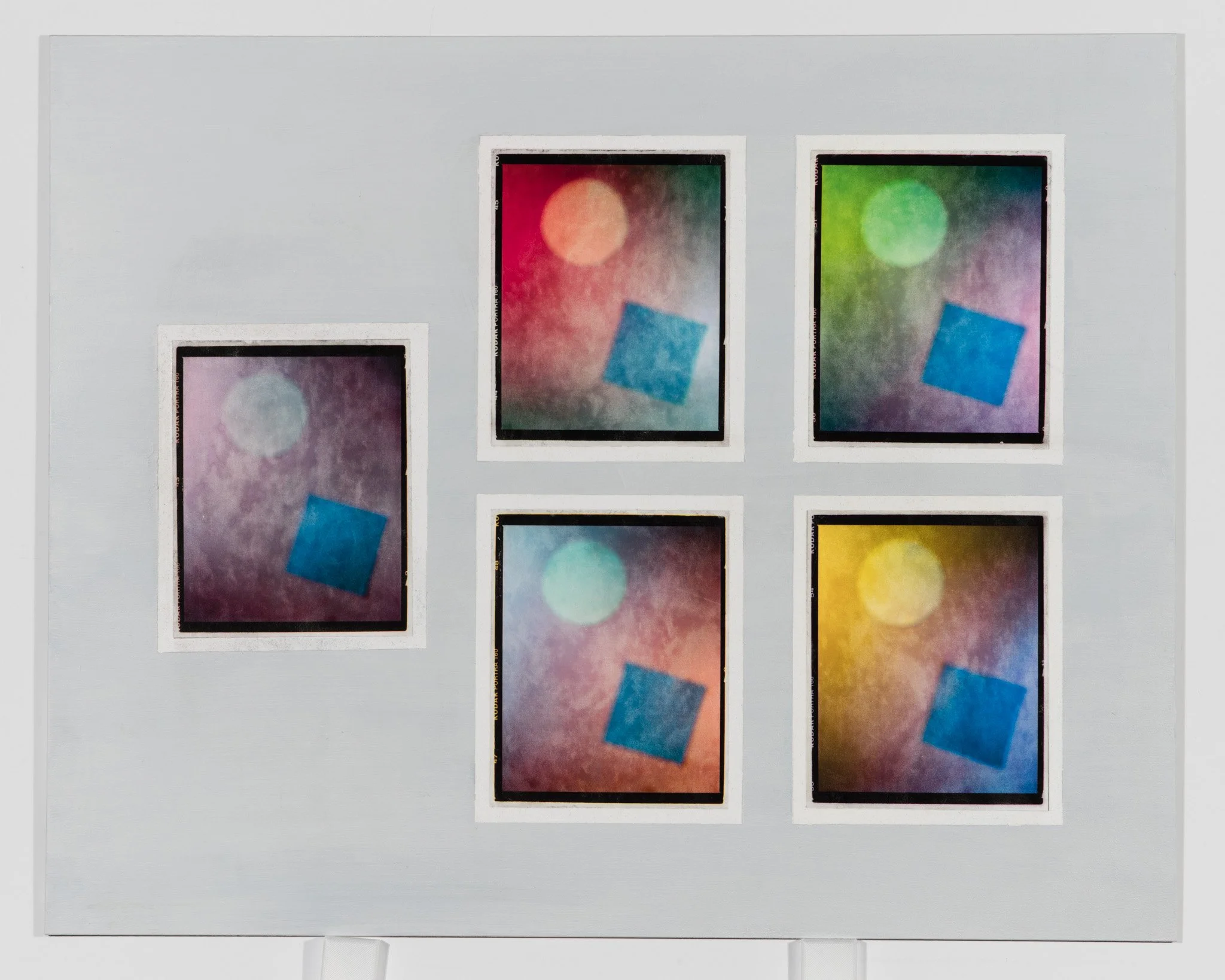
Cascades, Continuous, Aqueous (Pigment Ink Transfers to Board)
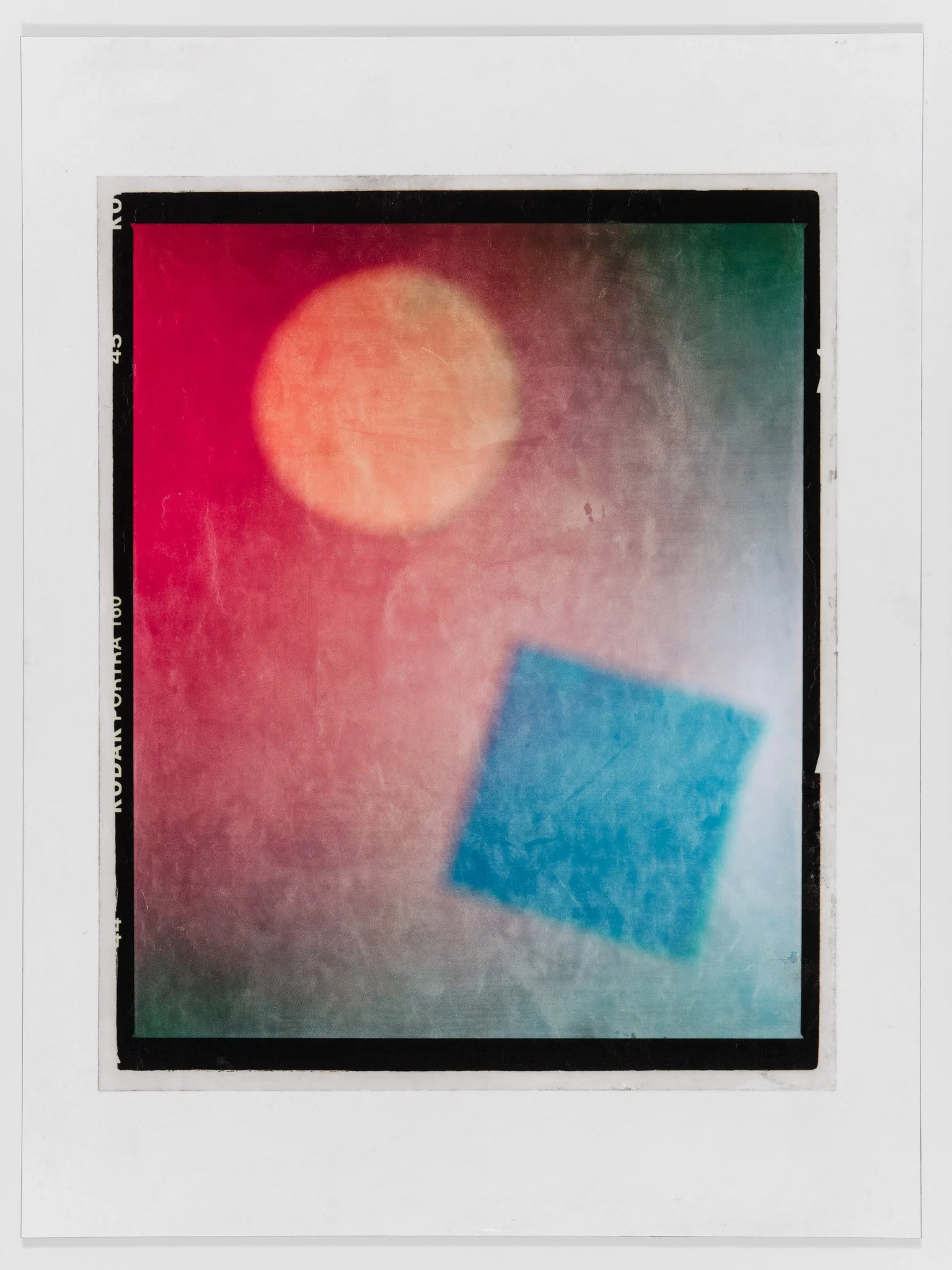
Cascades, Continuous, Red Green, Aqueous (Pigment Ink Transfer to Board)
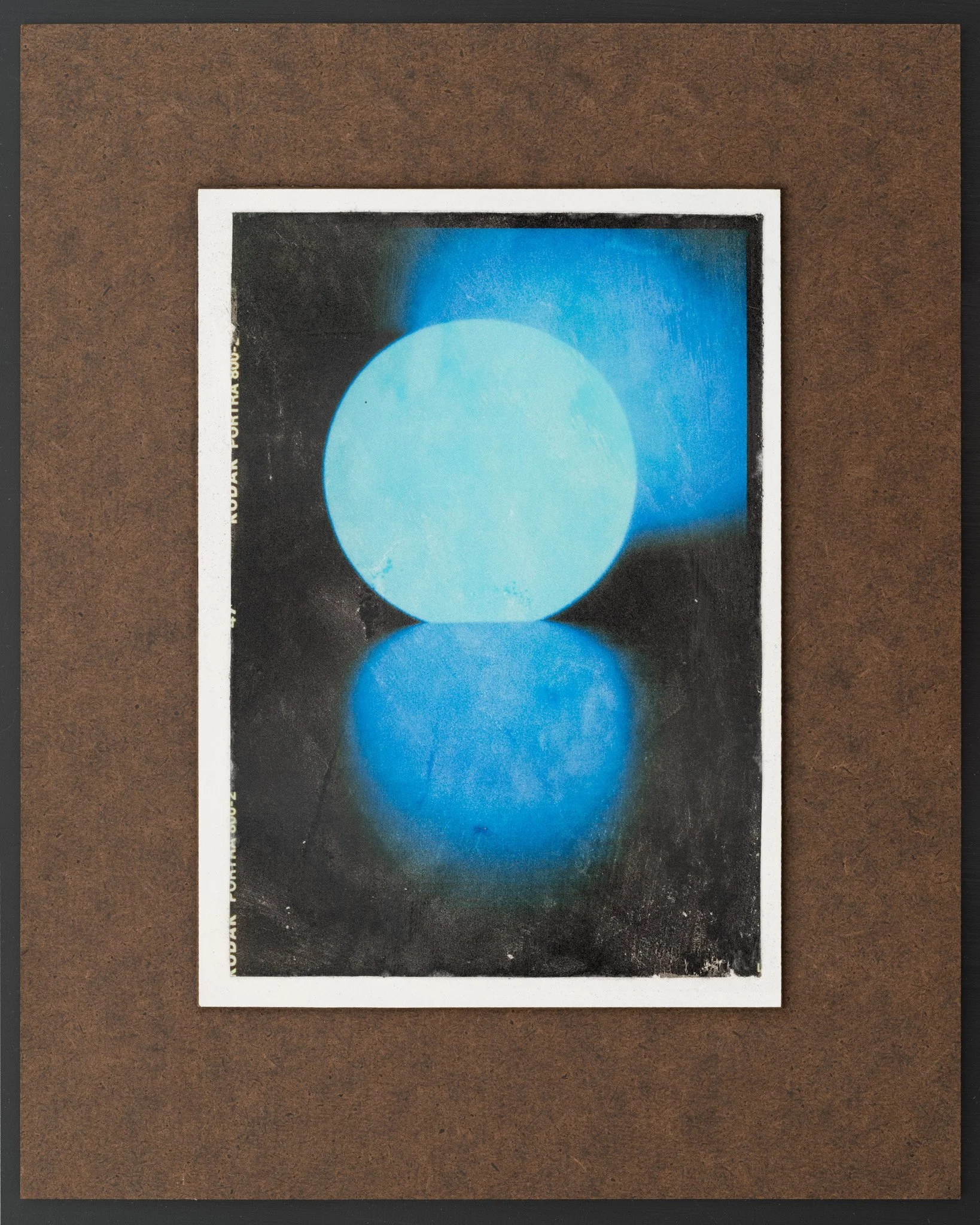
Orb: Twenty Flashes, Blue, Aqueous (Pigment Ink Transfer to Board)
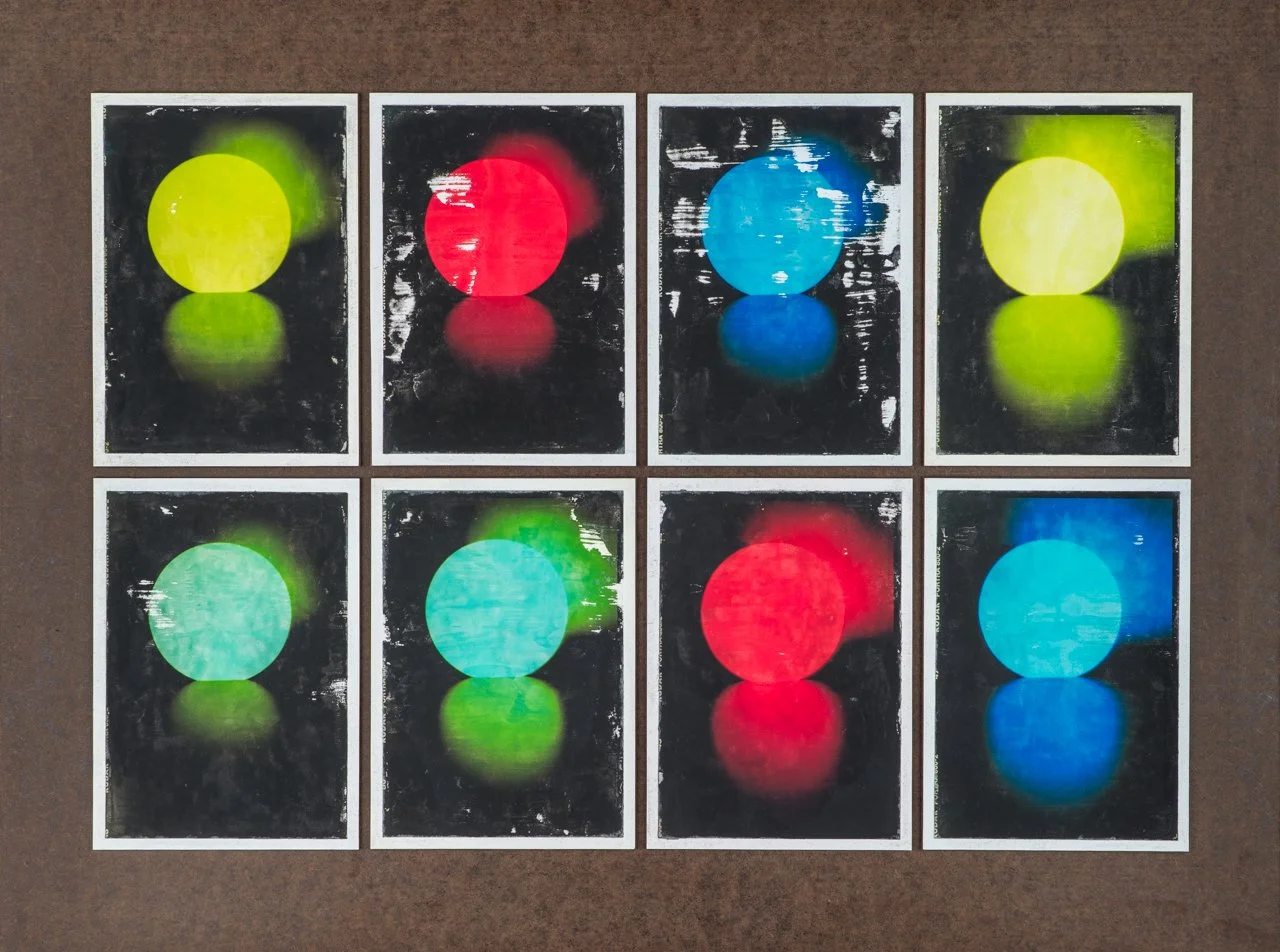
Orbs: Paradigms, Aqueous (Pigment Ink Transfers to Board)
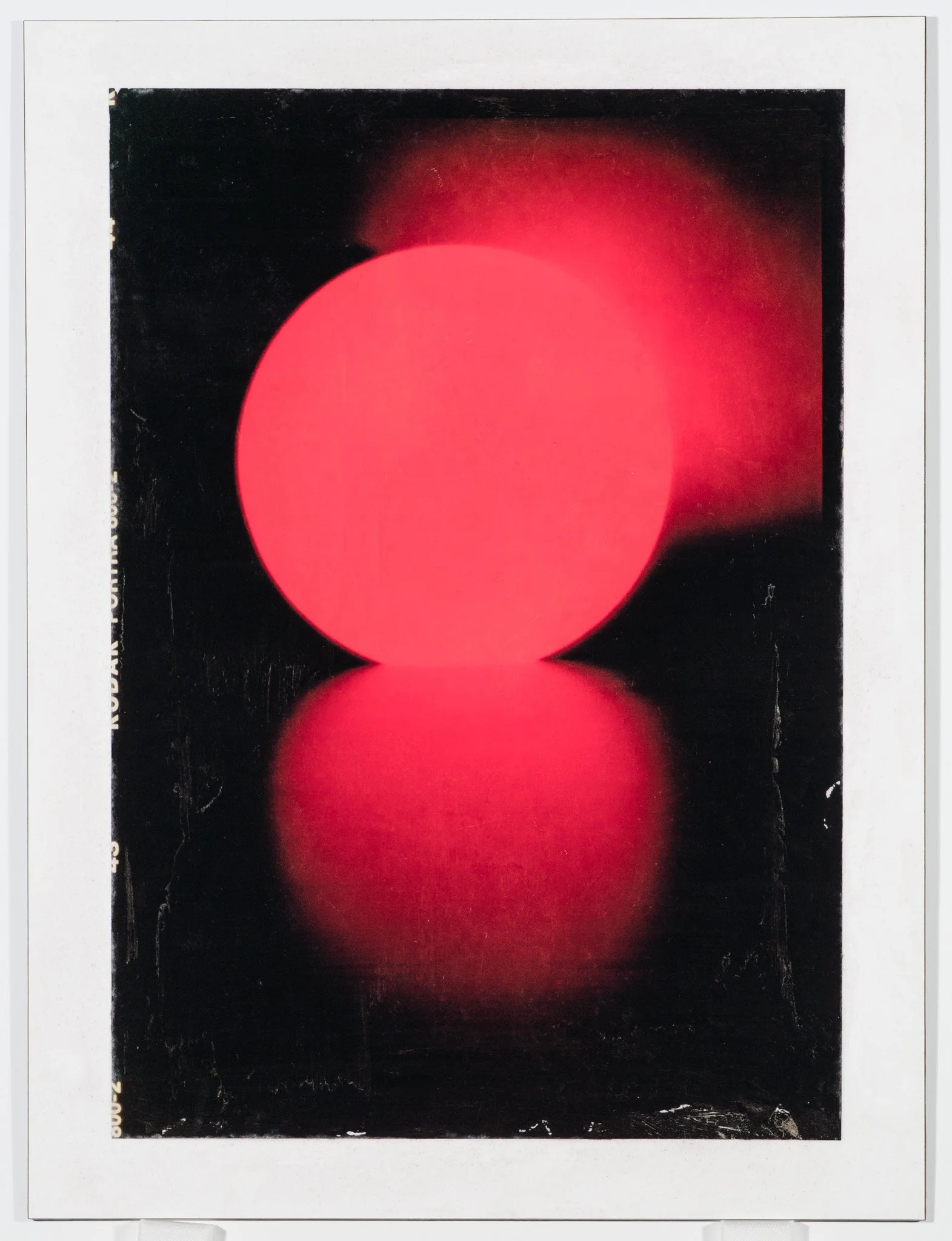
Orb: Twenty Flashes, Red, Aqueous (Pigment Ink Transfer to Board)
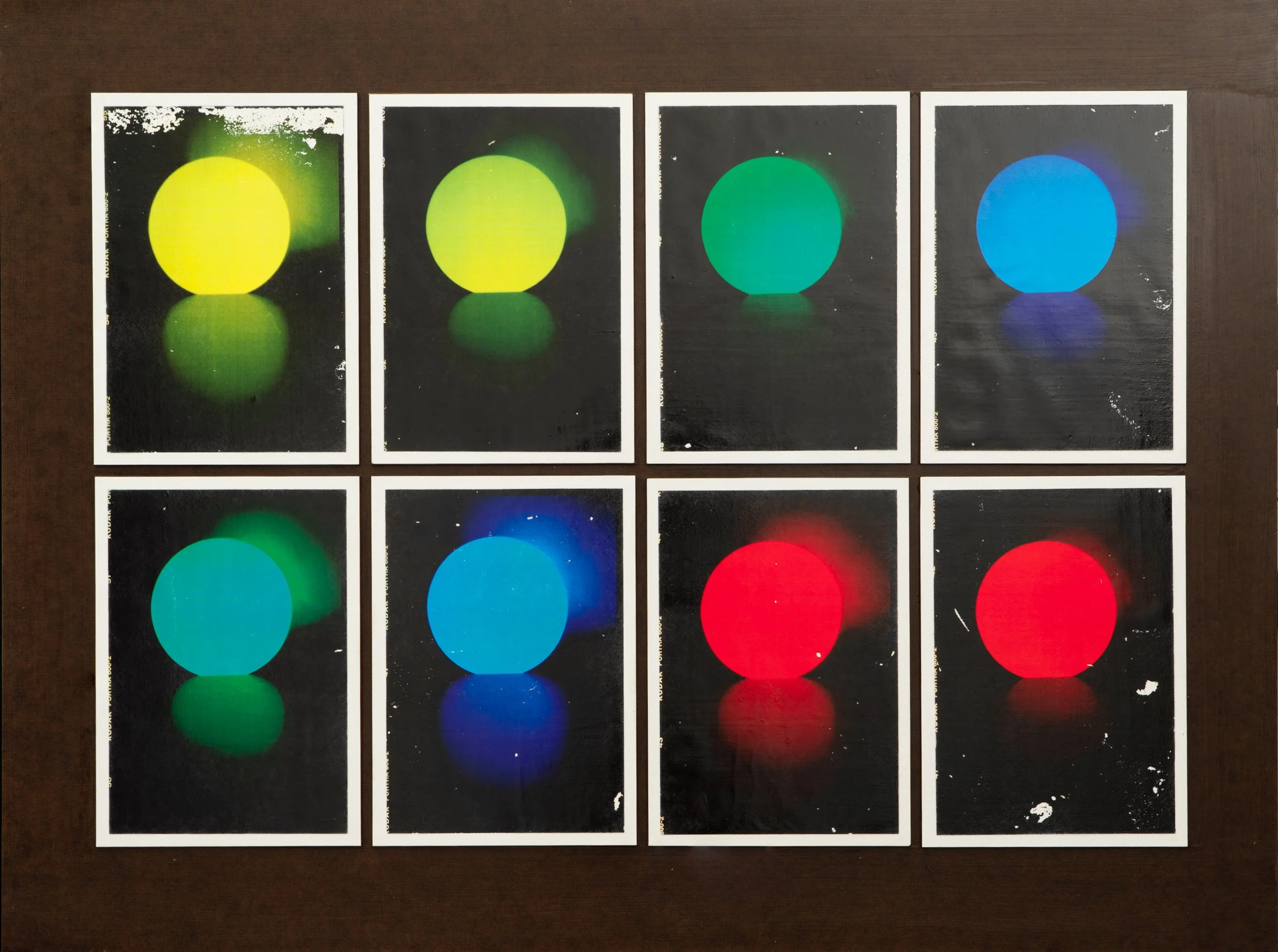
Orbs: Rebalanced, Fused (Laser Print Transfers to Board)
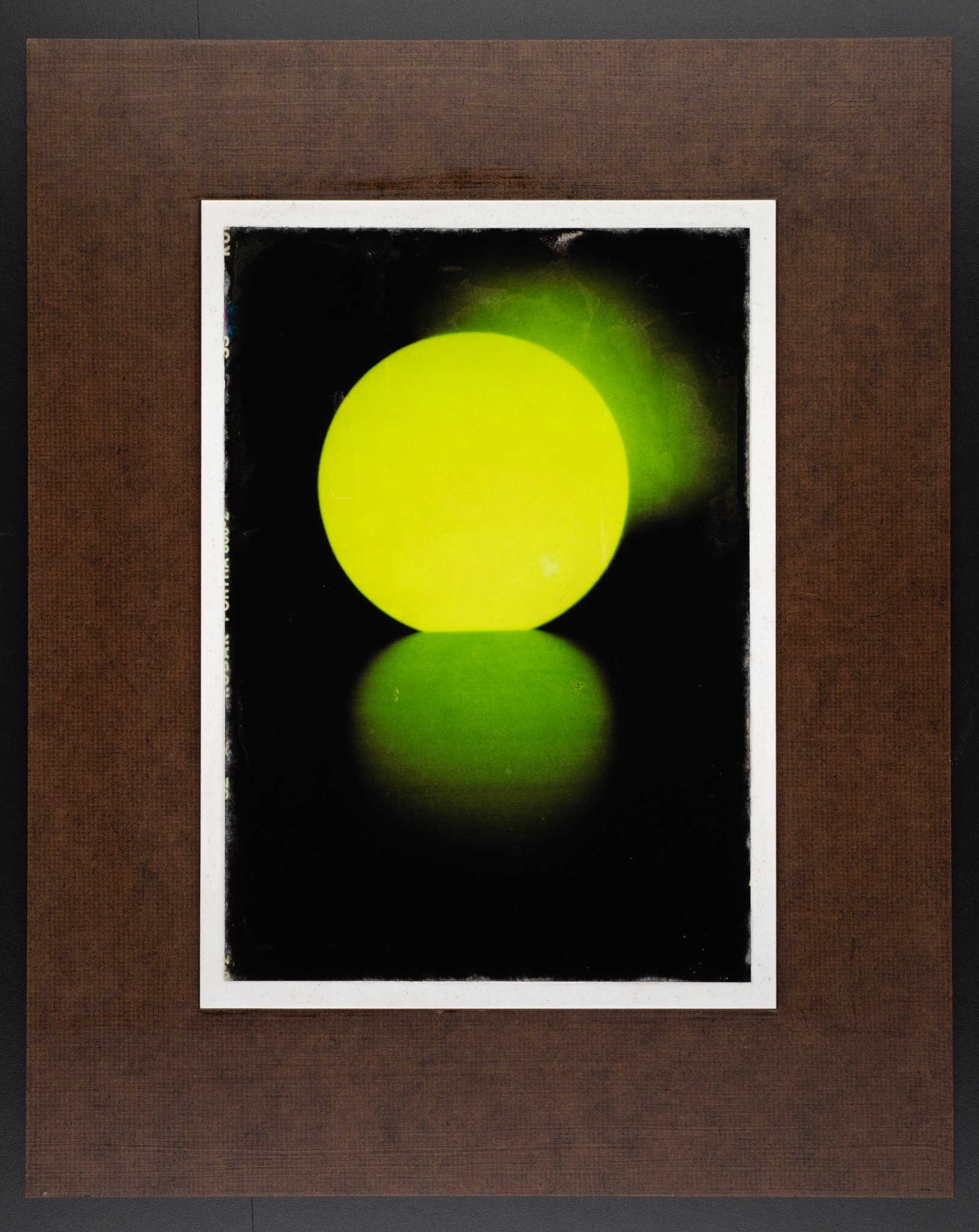
Orb: Five Flashes, Yellow, Aqueous (Pigment Ink Transfer to Board)
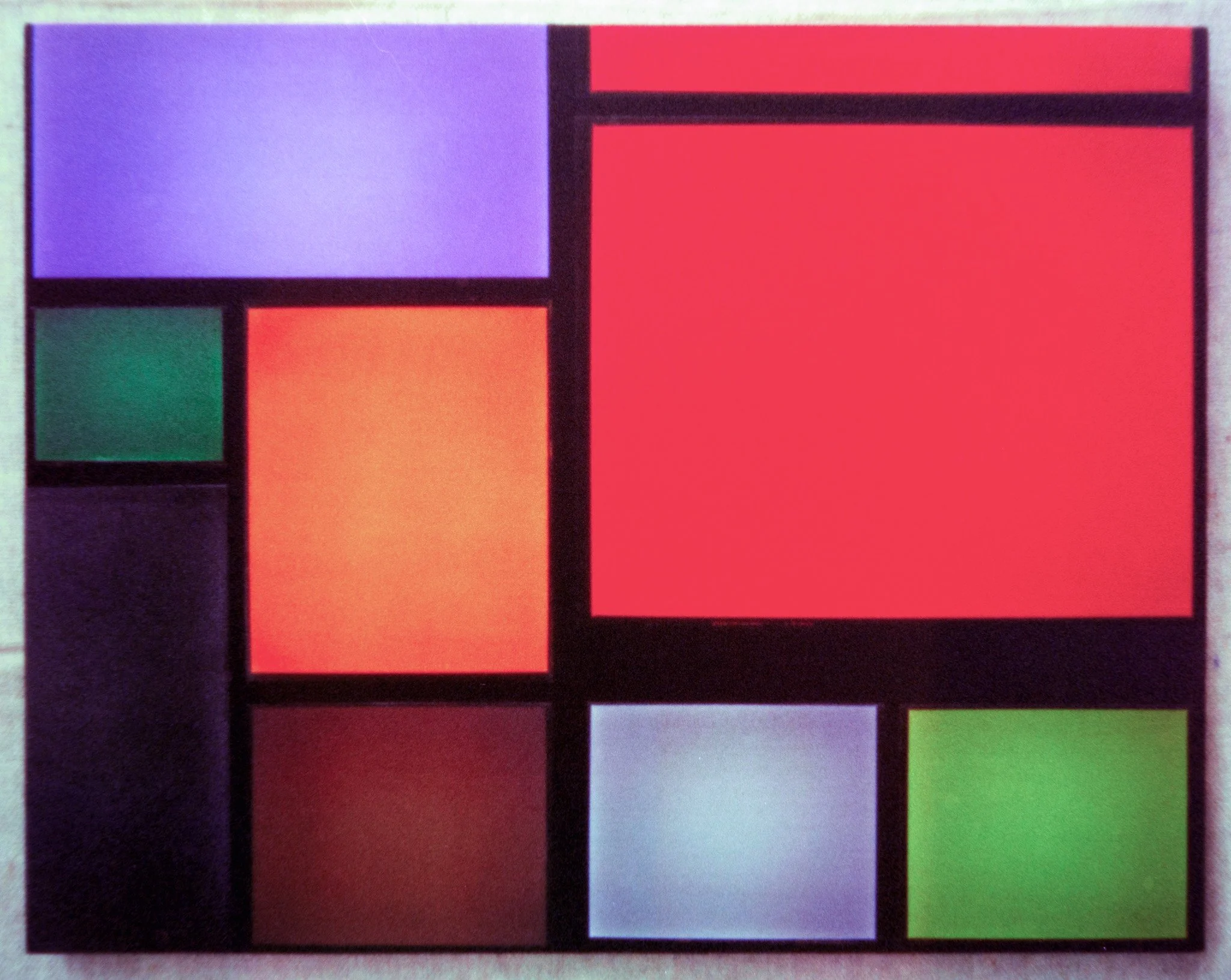
Managed Tension (Metal Print of Pinhole Photography)
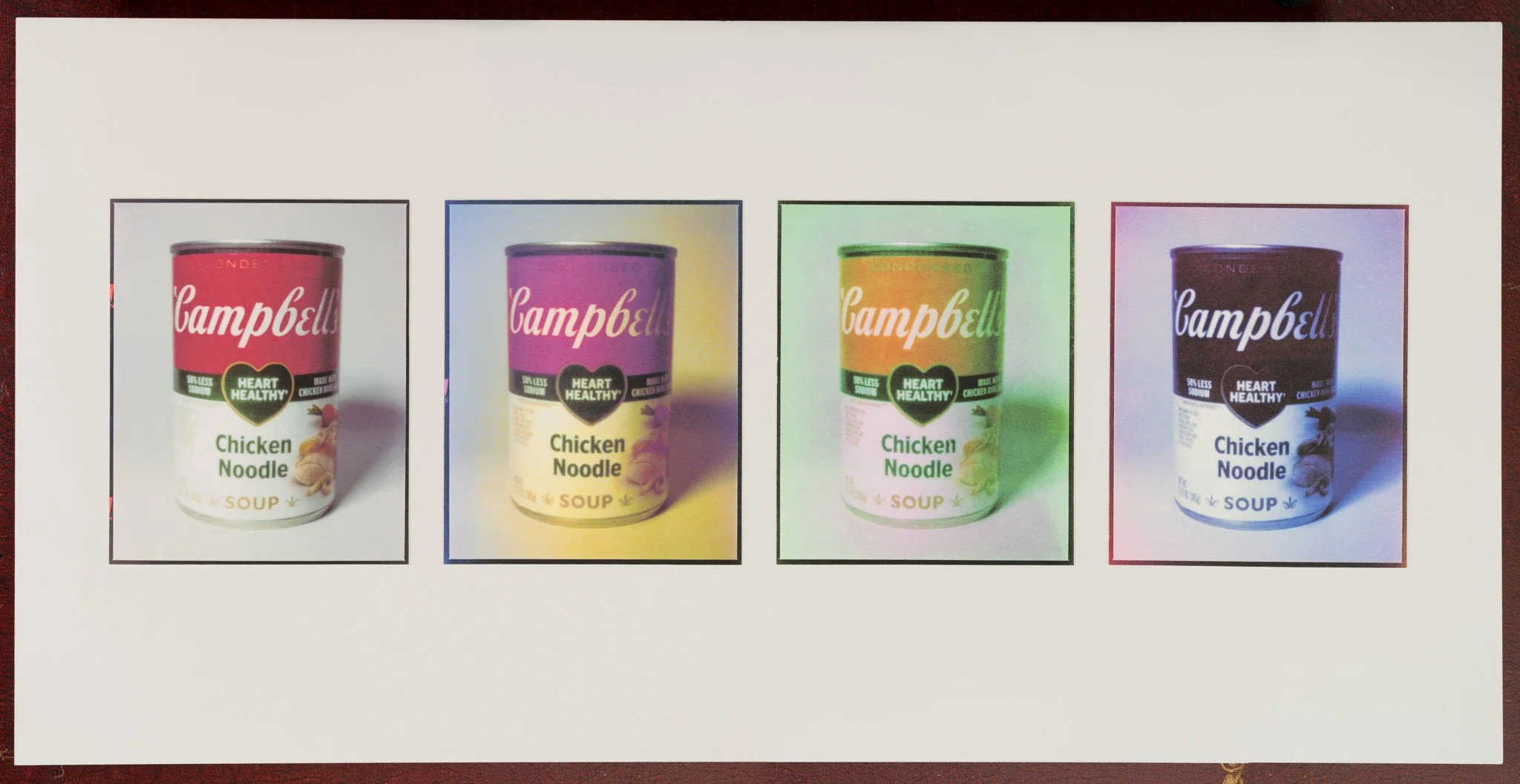
Reactions Altered 1 (Inkjet Print on Watercolor Paper on Board)
Exhibitions
“Paradigms, Aqueous”, “Twenty Flashes, Blue, Aqueous” and “Five Flashes, Yellow, Aqueous“ at Mixed Media Narratives, Alternative Photographic Arts Group exhibition, Mayo Performing Arts Center, Starlight Gallery, September 8 to October 4, 2026
“Rebalanced, Fused” at Members Exhibit, Visual Arts Center of New Jersey, September 3 to September 11, 2026
“Managed Tension” and “Reactions Altered 1“ at Altered Narratives Exhibit, Mayo Performing Arts Center, Starlight Gallery, April 14 to May 17, 2026
“Managed Tension” and “Reactions Altered 1” at Art House by Early Burdz, New York City, March 27, 2026
Artist Statement: Touch the Light: Mixed Media
This practice uses authored systems to transform light events into physical art objects. Within the studio, initial conditions are set by constructing geometric assemblages, balancing colored light, and using pinhole optics to record the interaction of light across the shapes.
Once this optical framework is established, the work moves entirely into physical material transformation. Using acrylic gels, pressure, and substrate panels, multi stage image transfers convert the initial exposures into layered modulations of pigment density. Rather than sitting flat on a surface, ambient room light penetrates and reflects off the underlying panel or aluminum, creating surface depth that shifts with the viewer's position.
By establishing overarching rules and allowing the physical transfer to execute the result, the process balances intentional structure with material chance. Final curation determines which singular objects remain as permanent records of the system.